EMOTIONS CAN MAKE US SMARTER. We sometimes give short shrift to emotions when we’re talking about academic success, but the science of learning is demonstrating that our emotional state represents a crucial internal situation that influences how intelligently we think and act.
When we’re in a positive mood, for example, we tend to think more expansively and creatively. When we feel anxious—for instance, when we’re about to take a dreaded math test—that anxiety uses up some of the working memory capacity we need to solve problems, leaving us, literally, with less intelligence to apply to the exam.
One line of investigation within the science of learning has to do with the feeling of hope. Research in this area has found that a feeling of hopefulness actually leads us to try harder and persist longer—but only if it is paired with practical plans for achieving our goals, and—this is the interesting part—specific, concrete actions we’ll take when and if (usually when) our original plans don’t work out as expected.
Author Archives: resourcefulresourceteacher
Emotions and Learning – Be a Cheerleader!
Fluency Comes From Interesting Places

My son had a difficult start with reading. He got extra help at school (we love you Mrs. L.). When he “graduated” from the remedial group he was kind of sad because it had been so much fun and so rewarding. That’s when we bought our son his first superhero encyclopedia. He read it, and read it, and read it, and ….. He now has more encyclopedias and they are held together by duct tape. He is reading words like “pyrokinetic” and “intergalactic”.



Repeated reading builds fluency. This summer, it is important for parents to know that when it comes to helping your child read more quickly and more smoothly it is the quantity of reading that counts more than the quality. I hear some parents that want to “push” their children to read more challenging books but if fluency is your target, aim for books that are at your child’s independent reading level and encourage them to read it again and again.

Teaching Expression
Our mini lesson for reading today was about expression. My students seem to have mastered expression when they tell a story so today our focus was on adding expression when they read a story. I told my students about the time when I read Stone Fox to my grade two class and I started to cry – I got so caught up in the expression. I told my students about the time I read Are You My Mother? to my then two-year old and he started to cry when the little bird cries out “I want my mother!”
I tried to emphasize that your expression draws people into what you are saying.
I also wanted to emphasize expression because adding expression will increase students’ understanding as they read.
I have attached our poster Reading with Expression.

Graphic Organizer for a Report
Great writing this week from some of my favourite kids! They used a graphic organizer as their “map” to help them plan a report of an event that has just happened at school or will be happening soon. We discussed that reports and reporters stick to the facts (not opinions) and they answered the who, what, when, where, why, and how about an event.
The graphic organizer we used is here.
I think I am convincing them that a graphic organizer, or plan, is worthwhile. Today, in about 15 minutes, they had each written a short rough copy report from their completed graphic organizer.
They were successful (fact) and I think they are amazing (opinion)!
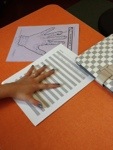

You can find my rough copy paper here.
ADHD – Is North America handing out a pharmacological band aid?
Most parents I meet do not want to medicate their children. Most teachers do not want medicated students. However, there are still some obvious behaviours to deal with.
I thought this was an interesting article shared on Facebook about the North American diagnosis of ADHD vs the French diagnosis of ADHD.
In France doctors look at the underlying social and contextual causes. Nutritional causes are examined and parenting styles are also said to produce better behaved children. I think they are onto something – ‘très bien’!
Great Ideas Come From Pinterest
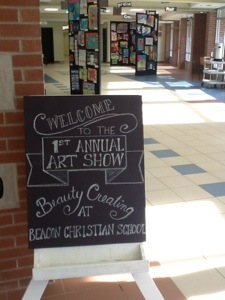 I love Pinterest when I have plenty of browsing time. This week a Pinterest idea from a middle school art blog came to life at our school and I think it is fantastic! Best of all is that these boards are so light weight and you only need a few pins to attach things. I can see them being used for so much more than an art show.

Re-reading for Fluency

This gallery contains 4 photos.
A focus this week: fluency and sight words. A big part of this is re-reading. Sometimes I find that a challenge, especially with older children. Our project this week was using a sight words story from Mrs.Perkins.com. I made a computer file for each student that divided the story into four parts. Over a few […]
Open Doors
When I was a very young teacher I remember a day when I had a substitute teacher teaching my class because I had a doctor’s appointment. Upon my return I noticed two things: first, that the classroom door was open and, secondly, the substitute was speaking to my students in a tone that I judged to be harsh and impatient. I remember thinking, “What if a parent walked through this hallway right now?”
Since that day, this memory has challenged me to leave my classroom door open as often as a I can. An open door serves as a physical reminder that we need to be accountable.
Sometimes I get too loud in my storytelling or the classroom next door is too loud and we close the door, but I believe that a parent should be able to walk down a hallway at any time and smile.
Laughter and Pain
“There is a thin line that separates laughter and pain, comedy and tragedy, humor and hurt.”
Erma Bombeck
Today I narrowly escaped serious injury….well maybe not serious injury but I am thankful that I only have a bruise rather than a broken ankle. One of our young athletes slapshotted (that’s what I call it ) my ankle while I was on yard duty.
Why the above quote? A couple of reasons:
(1) the humour in the fact that I don’t play sports because I’m too afraid to get hurt
(2) the pain was worth the laughter and fun I witnessed as I was sandwiched between two groups of boys. I watched (too closely) a group from grades six to eight play hockey and another group from mixed grades play basketball. There is something so neat about watching mixed ages play together – there seems to be less competitiveness and a lot more laughter due to the acceptance of different skill levels.
I feel that the risk the school takes letting boys play hockey at recess is rewarded with laughter and humour. I guess I will continue to watch closely (though not as closely) so as to try and avoid the pain and hurt.

Teach Off The Wall
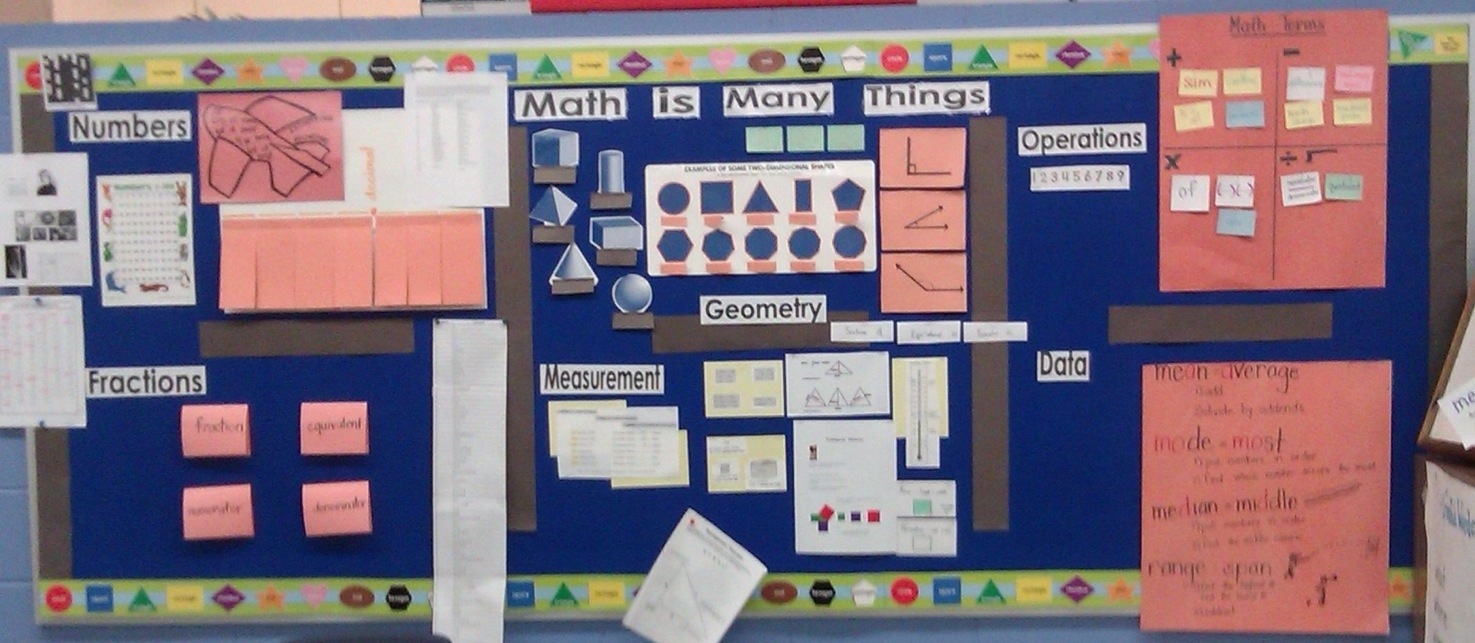
I love the idea of teaching off the wall. This bulletin board serves several purposes:
1. It illustrates to students that math is many different things (I point that out when a student says, “I am no good at math!” I can show them that there are areas that they find difficult and areas they are good at.)
2. It provides review (I make flaps to hide and then show answers. The chart on the right uses paper clips to hold cards in place so they can be added with different lessons.)
3. It is an anchor chart.
4. It reminds ME of things we’ve done so I can point out connections and do regular review.
I maybe use this bulletin board too much. I keep adding things. Every time I find something cool I want to add it. Fibinocci is pictured on the left – my students can’t believe someone would spend all his time thinking about math!


 The Resourceful Resource Teacher