Author Archives: resourcefulresourceteacher

A Helpful Resource

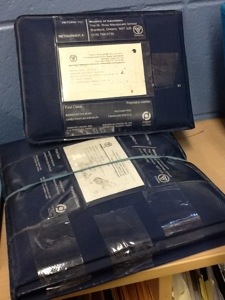
Heard of AERO? It stands for “Alternative Educational Resources Ontario”. I received, on loan, for free, 9 books on CD and download. Students will use the digital book, along with the hard copy, to complete age appropriate book reports, etc. and hopefully cultivate a love of books! I used two last year and they were such a hit that I am really excited about my growing digital library!

20130829-230241.jpg
I think people underestimate the benefits of digital books. Books experienced this way not only develop a love of books but also increase vocabulary, build comprehension skills, increase empathy for different characters and help the listener understand story structure.

A Checklist – Does Your Child Struggle with Executive Functioning?

Since I have been reading about executive function I found this checklist interesting. I bet many adults would read it and say “hey, that’s me!” It’s not something that has a cure, but knowing there is a struggle in this area means that putting strategies in place ahead of time would be very helpful and would prevent a lot of frustration. NCLD Executive Function Checklist

In fact, the newsletter from The National Center for Learning Disability has many great links including Tips For Talking to Your Child About Being Distracted and Unfocused and 13(Better) Questions to Ask Your Child About School.

20130821-075026.jpg

Back to School

Figuring out my schedule and EAs schedule is tough for me. Here is my chart 🙂

20130820-074201.jpg

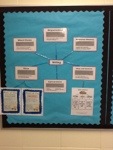
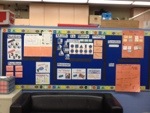
Bulletin Boards, now that is the “funner” part of preparing for school:

20130820-074356.jpg 20130820-074403.jpg 20130820-074409.jpg 20130820-074418.jpg 20130820-074425.jpg


So True!

20130727-121334.jpg

I have a sick ten year old today so I took the opportunity to read a book to him that I love but he would not choose on his own: Owls in the Family by Farley Mowat.

seen on Facebook today, sorry, no source

Did You Know That You Have Executive Skills?

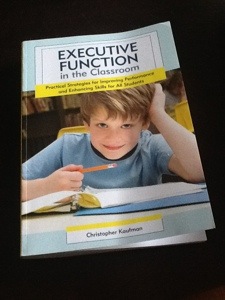
I’m just finishing a book about executive functioning. Most people don’t go around using these terms but we all use and need the skill sets that they describe.
Executive functioning is the set of skills that allow a person to plan a task, figure out the steps involved, activate the best strategies for the task, stick to the task, inhibit impulsive behaviour, and change strategies if needed. It is our planning skills and our ability to control ourselves and figure out ways to get something done.
Executive functioning plays a huge role in the life of a student. Much of a child’s executive functioning skills have been inherited. Also important, are the child’s developmental level and environment.

How do you teach your child or student to develop these skills?  A great start is by modeling how you organize yourself and speaking aloud the ways in which you plan a task.  For example, I might explain aloud that we have to be at a birthday party by 4 p.m. so I work backwards and figure on a half hour driving time, so that is 3:30 p.m., a half hour “getting ready” time so that is 3 p.m.  I need to start getting ready at 3 p.m.  Explaining the steps you take to execute a task will promote executive functioning.  The next time there is a similar task, help your child go through the same steps. 

So often we get upset at our children or students for poor planning but this is NOT a strategy for improving these skills.  Try the modeling and thinking aloud strategy.  Walk your child through it several times before expecting independence.

20130807-195518.jpg

20130807-205034.jpg

Link Between Childrens’ Lack of Sleep & Brain Power

“link between poorer mental performance and lax bedtimes”

Late nights ‘sap children’s brain power

BBC News Health

I read this study and wanted to say, “Thank you Captain Obvious!” (My kids taught me that 🙂

Through the summer I find it somewhat amusing to observe what lack of sleep and lack of a regular routine does to my own children. One of my children is like a young puppy – getting randomly hyper and racing around and then needing to veg on the couch watching TV. Another one of my children shows a diminished speech filter and can become highly critical. I’ve seen episodes of dippiness (i.e. milk in the cupboard), a short temper, a lack of creativity, an inability to remember multiple instructions, trouble listening, hanging around / unmotivated, lack of focus, impulsive behaviour and uncontrolled giggles. All could look like symptoms of ADD or ADHD (Attention Deficit Disorder or Attention Deficit Hyperactive Disorder). Hmmmmm.

Don’t get me wrong. Summer is so much fun for our family! I love the lack of routine and less strict bedtimes but they will have to remain summer activities for my kids.

20130711-145355.jpg

What’s On Your List of Awesome?

In about May, as the weather begins to change, the sun is shining longer, kids probably get less sleep, I notice a downward slide in motivation and an upward climb of negative emotions (in both my own children and my students).
This year to help with these “I can’t wait until summer blues” we read portions of 1000 Awesome Things.
I love the idea of finding joy in the small things. I showed my students the list of awesome that my own family had put together after reading The Book of Awesome. So many small things to be thankful for!

So what’s on your list of awesome? Here are some of my favourites right now:

20130703-085641.jpgMy homeade flavoured water!

20130703-085649.jpgMy nutribullet smoothies!

20130705-093013.jpg My quiet spot!

20130705-084622.jpgMy Martha Stewart get organized binder!

20130705-085049.jpgHummingbirds and my new hummingbird feeder!

A Card for Many Signatures

20130627-094443.jpg
Another card for a valuable volunteer! I don’t know what our school would do without these dedicated individuals!
(Our words of thanks are written around the bow.)

Re: Time

20130623-203309.jpg
There is a time for everything under the sun. King Solomon said that. Summer is time to recharge and rejuvenate. Although I know they need a break, I long for my students to review. I fear the backslide after they have worked so hard to get to where they are.
Three suggestions for summer review:

1. Do it regularly so that it becomes “no big deal”, just part of the daily routine.

2. Review should be at a level that it can be done independently. You, the parent, are the enforcer, making sure it happens, but kids should be able to do it without you. In my house a math page and a French activity must be done before screen time. Since my kids want screen time, they make sure to get their work done.

3. Give your kids the option of just going to bed OR going to bed and reading for twenty minutes. Kids will say, “Can I just go to bed later?” You say, “No, you can go to bed now with reading or without, but you go to bed now”. My reluctant reader always chose reading in this scenario! Soon he was into a book and was seen picking it up during the day too!

I am looking forward to renewing my focus and reflecting on my year. I hope my students take time to remember their achievements and solidify their learning.

Volunteers Are So Very Valuable

20130620-214947.jpg
Each student wrote on a heart, forming a petal. Beautiful messages for a much loved helper.